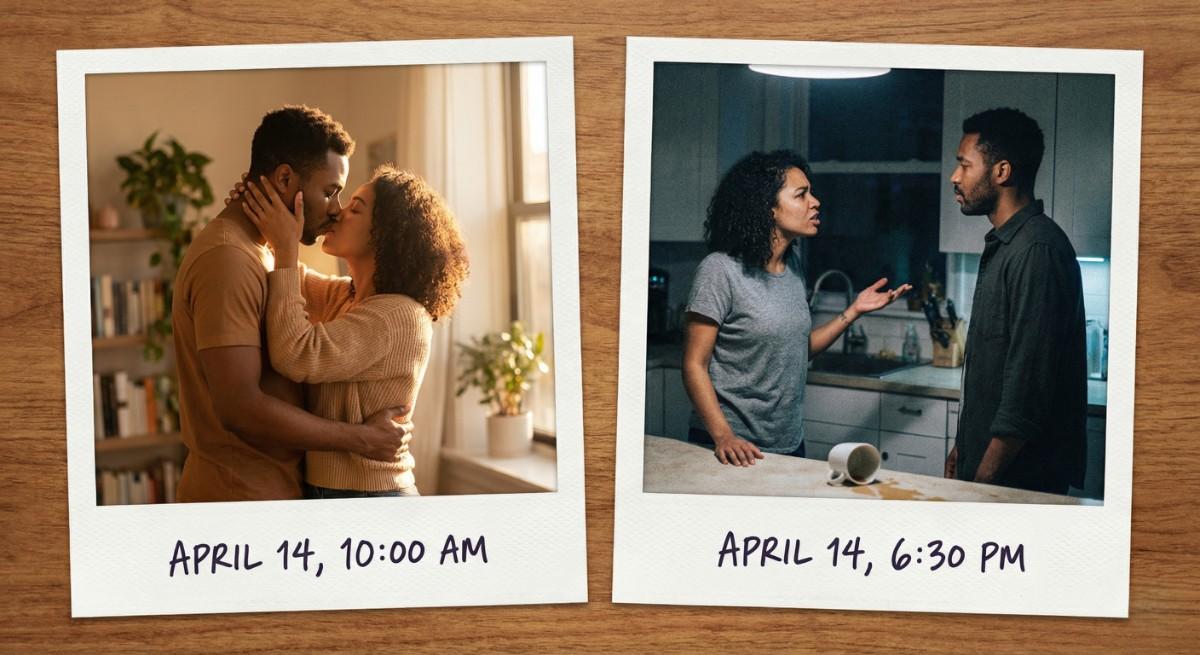
We have been taught to read intensity as meaning. To feel the storm and call it a soul connection. To survive something and decide it must have been sent to us for a reason. The most intense love of your life and the truest love of your life are frequently two entirely different people, and mistaking one for the other is one of the most quietly devastating errors a woman can make.
I want to start with an apology on behalf of every romantic film, every vision board assembled at two in the morning, and every well-meaning person who ever told a woman that love is supposed to feel like electricity. Not because electricity is not real, it absolutely is, but because somewhere along the way we collectively decided that the more a relationship destabilizes you, the more significant it must be. And that particular piece of inherited wisdom has cost women an extraordinary amount of time, sleep, and self-respect.
I have come to believe, after a great many conversations and a fair amount of personal evidence, that the most intense love of your life and the truest soulmate love of your life are frequently two entirely different people. A reader sent me a story that I have not stopped thinking about since. Naomi spent nearly four years calling a man her soulmate. The instant recognition across a crowded room. The feeling that she had known him in some other life before this one. The connection was so electric it almost hurt to look at directly. It also required her to manage his moods constantly, explain him to everyone she cared about, and spend most of her evenings available for a version of him that appeared only occasionally and always on his terms.
She held on because nothing had ever felt like that before, and she was completely convinced that the intensity was proof of destiny. It was not. And the day she finally understood the difference between a genuine soul connection and a trauma bond wearing the costume of one, she said it felt like setting down something very heavy that she had been carrying for so long she had forgotten it was not simply part of her body. Here are the twelve reasons the most intense love you have ever felt is probably not your soulmate.
Intensity Is Produced by Uncertainty, Not by Compatibility
Here is the neurological reality that nobody puts on a vision board: your brain produces significantly more dopamine in relationships where the reward is unpredictable. This is the exact same mechanism that makes gambling addictive. When you cannot predict whether you are going to receive warmth or distance, closeness or withdrawal, the moments of warmth hit considerably harder than they ever would in a relationship where warmth is simply the consistent and unremarkable baseline.
This means the relationship that had you feeling the most alive, the most electric, the most certain you had found your kind of love, may have felt that way precisely because it was inconsistent. The intensity was real. But it was produced by your nervous system's response to uncertainty, not by a genuine soul connection. These are two very different experiences that feel almost identical from the inside, and the confusion between them is where a great deal of time gets quietly lost. The longer she spends inside that confusion without naming it clearly, the more time she will invest in the future selecting the same instability and calling it love.
The Most Painful Love Is Not the Most Meaningful
There is a cultural story about love and suffering that is extremely well-marketed and profoundly unhelpful. The idea that the love which costs you the most is the love that means the most. That the relationship which brought you to your knees was the one that shaped you most profoundly and therefore must have been your most significant connection. But the things that actually hold up under honest scrutiny describe love differently. They talk about being known, being safe, being chosen consistently. Not about being brought to your knees.
Pain is not a measure of love's significance. Pain is a measure of how much you were asked to give without equivalent return. The relationship that hurt you the most was not necessarily the one that loved you the most. It may simply have been the one that asked the most of you while giving back the least, and your depth of feeling was a reflection of your own capacity, not of the relationship's value. A woman who keeps offering that depth to connections that cannot hold it will eventually begin to wonder whether the depth itself is the problem, and that is the most expensive confusion of all.
He Awakened You but Awakening Is Not the Same as Belonging
Some relationships are not meant to be forever. They are meant to crack something open. To show you a version of yourself you had not met yet. To introduce you to your own capacity for depth and feeling and desire. These relationships are real and they matter and they change you, and none of that means they were your soulmate. It means they were a catalyst. And catalysts, by definition, are not the destination. They are the thing that starts the reaction.
The profound feeling you carried inside that relationship was not evidence that he was the one. It was evidence that he had activated something in you that had been waiting to be activated. The soul connection you felt was yours. It was coming from inside you. He just happened to be standing there when it woke up, and that is a meaningful thing, but it is not the same thing as belonging. Every year she spends giving him credit for her own awakening is a year she remains emotionally tethered to a moment that has long since finished its purpose.
The Connection Felt Cosmic Because Your Nervous System Was Dysregulated, Not Because It Was Destiny
This one requires a level of honesty that is genuinely uncomfortable, so I want to say it as gently as I know how. When your nervous system has been dysregulated by inconsistency, by push and pull, by the specific cycle of distance and warmth that characterizes emotionally unavailable relationships, the moments of closeness feel transcendent. Not because they are transcendent. Because the contrast is so dramatic that your brain processes them as extraordinary.
Women describe these moments using the language of destiny because the feeling is genuinely unlike anything they have experienced before. But the feeling being unlike anything before is a symptom of the dysregulation, not a sign of fate. The signs that you are confusing chaos for chemistry are almost always present in these relationships, and they are considerably easier to read from the outside than from inside the experience of them. And the cycle will run, quietly draining the years she was meant to spend somewhere else, for as long as she allows the adrenaline to masquerade as meaning.
If you have spent time wondering whether the chaos was the connection, the Intimate Clarity Bundle was written for the woman who is finally ready to speak from somewhere steadier.
Get the BundleA True Soulmate Does Not Make You Feel Like You Have to Earn Their Presence
The most resonant descriptions of a true soul connection describe being known completely, chosen freely, loved without conditions attached. And yet the relationships women most often call their soulmate connections are relationships where the love felt perpetually conditional. Where she had to be in the right mood, bring the right energy, say the right thing, need the right amount, in order to access the version of him that felt like home.
A true soul connection does not ask you to perform for access. It does not make you feel like you are one wrong move away from losing the warmth. Saying that someone is your soulmate should come with consistency attached to it, not with an unspoken asterisk that reads unless you need too much or push too hard or catch me on a bad day. The performance requirement is not love asking something of you. It is insecurity in the connection asking you to compensate for it, and a woman who spends years compensating for someone else's emotional unavailability builds a very specific skill set that will be the first thing she reaches for the next time love requires her to show up, unless she stops and teaches herself something different.
The Relationship That Nearly Broke You Was Not Sent to Complete You
I need to say this one clearly because it is one of the most quietly damaging things women tell themselves to make sense of surviving a painful relationship. The idea that it happened for a reason. That the universe sent him to teach her something. That the breaking was necessary and therefore the person who broke her was significant in a destined way. And I believe in growth. I genuinely do. Hard experiences teach us real things. But I do not believe that surviving someone qualifies them for the title of soulmate.
Some relationships are lessons. That is real and it is true and the lessons are often important ones. But a lesson is not a soulmate. Knowing clearly whether what you survived was a toxic relationship or something genuinely worth returning to is the question that sits underneath all of this, and it deserves an honest answer. Confusing the two keeps women in relationships that have already said everything they came to say, waiting for a conclusion that was never part of what that particular connection was designed to offer. Calling a lesson a soulmate is the story that keeps a woman standing at a door that was never going to open the way she needed it to, long after the lesson itself has finished speaking.
Intensity Fades and What It Leaves Behind Tells You Whether It Was Real
Every relationship has an early intensity. The feeling of recognition in those first weeks, the late nights, the conversations that stretch toward four in the morning, the sense that you have finally found something that matches the size of what you are capable of feeling. This is real. And it fades in every relationship eventually, because intensity is not a sustainable state. It is a beginning, not a permanent condition, and the work of love is what happens after it settles.
What matters is what remains when the intensity does settle. In a genuine soul connection, what stays is warmth, safety, curiosity, companionship, and a love that does not require drama to prove it is still there. In a relationship that was intensity without sufficient substance underneath it, what remains when the electricity fades is usually a hollow kind of quiet, a growing awareness that the depth she thought she felt was mostly her own depth being reflected back at her by a connection that was never quite as mutual as it felt. What she gave to that reflection does not come back, but understanding this now determines whether she gives it away to the same kind of mirror again.
A Real Soul Connection Does Not Require You to Lose Yourself to Maintain It
Naomi told me in her story that by the end of the relationship she could not quite remember who she had been before it started. Her preferences had quietly shifted to match his. Her schedule had organized itself around his availability. Her friendships had moved to the edges of her life because maintaining the relationship had required so much of her center. She described it as looking in the mirror and seeing someone who was technically herself but had been adjusted, piece by piece, to fit inside someone else's life.
A genuine soul connection should make you more of yourself over time. Not less. Reclaiming who you were before the relationship reshaped you is often the work that follows recognizing this particular truth, and it is some of the most important work a woman can do. The connection that asked you to continuously minimize, adjust, and disappear in order to keep the peace was not a soulmate connection. The woman who has learned to disappear as a form of love will carry that strategy forward into every new connection she enters until she decides, deliberately and with full awareness, to do something different.
If you are somewhere in the middle of coming back to yourself after a relationship that asked you to disappear, the Bundle was built for exactly that woman.
Get the BundleThe Love That Felt Like Fate Was Really Just Familiarity Wearing a Costume
This is the one that requires the most honesty and does the most good when a woman is finally ready to hear it. The love that feels fated, the connection that feels like recognition, the sense that you have met this person somewhere before in some other life, is very often not fate at all. It is familiarity. Her nervous system recognized something in him, a dynamic, an emotional pattern, a particular quality of attention followed by withdrawal, that it had been trained to respond to by much earlier experiences in her life.
The recognition felt cosmic because it was deep. But deep is not the same as right. The reasons a woman keeps finding the same man in a different face almost always trace back to exactly this: the familiar pattern reading as destiny, the recognition of something known being mistaken for the recognition of something right. An unexamined pattern does not pause respectfully between relationships; it follows her into the next one, wearing a different face, until she names it precisely enough to stop mistaking familiarity for fate.
Your Most Intense Lover Probably Mirrored Your Wounds, Not Your Wholeness
A genuine soul connection reflects something whole in both people. It sees the full person, the healed parts and the still-healing parts, and it loves the whole picture with equal warmth and without weaponizing the vulnerable places. The intense lover, the one who felt like a soulmate, very often mirrors something different. He mirrors the unresolved places. He activates the attachment wounds. He reflects back the fears about being too much, or not enough, or fundamentally unlovable without significant effort.
And because that activation is so deep, it feels profound. It feels like being seen. But being seen in your wounds is not the same as being loved in your wholeness, and the relationship that consistently activated your most painful places was not showing you your soulmate. It was showing you your unfinished business. The unfinished work that brought her to that relationship is patient; it will keep sending her variations of the same man until she turns toward it directly and stops asking someone else to carry what only she can put down.
Interlinked Souls Do Not Spend Most of Their Time in Confusion and Longing
The imagery of a true soul connection is beautiful. Two people so deeply aligned that the space between them is warm and full of genuine recognition. What it is not, and what no one seems to mention alongside the beautiful imagery, is anxious. It is not confused. It is not characterized by long stretches of wondering where you stand or what you mean to someone or whether the warmth of last week is going to be available this week.
The relationship that most women describe as their soulmate connection is, upon honest examination, a relationship that kept them in a fairly permanent state of low-grade longing. Wanting more of him than he consistently offered. Reaching toward a version of the connection that appeared sometimes and disappeared without warning. A true connection describes fullness and recognition and rest, not the particular hunger of loving someone who is never quite all the way present in the relationship with you. A woman who has normalized that hunger will not recognize steadiness when it finally arrives, because steadiness will not produce the craving she has come to mistake for feeling something real.
Your Soulmate Will Feel Like Rest, Not Like a Storm You Survived
This is the last one and it is the most important one and I want you to read it slowly. The love that deserves the full weight of the word soulmate will not feel like white-knuckling through something. It will not feel like a storm you are proud of surviving. It will not produce the particular exhaustion of loving someone who keeps you permanently unsettled and then rewards you occasionally with the warmth you needed all along.
Your soulmate will feel like being able to breathe all the way out. Like a conversation you do not have to rehearse beforehand. Like a Sunday morning that does not require management or navigation or careful calibration of your mood to match his. Like being fully yourself and having that be not just acceptable but genuinely celebrated. The green flags that tell you a man is actually safe to love describe exactly this quality: steadiness without conditions, warmth without an asterisk, presence that does not require you to earn it before every access. She will miss it entirely if she keeps measuring the quiet of something genuinely safe against the noise of something that was always hurting her.
The Woman Who Came Through the Storm
Naomi wrote to me again, about a year after her original story. She was with someone new, and the first thing she noticed was that nothing felt like electricity. No longing living permanently in her chest. No daily calibration of herself to match his mood. Just a man who showed up consistently, who remembered what she told him, who made her feel fully herself without requiring the management that had become second nature to her over four years of something else entirely.
She said it felt almost boring at first. Then she realized that what she had been reading as boring was actually just peace, and that she had been so deep inside the storm for so long that peace had registered as absence rather than arrival. Nothing was missing. She had simply found what she was always looking for in a form she had not been taught to recognize.
The work she described afterward was not the work of recognizing the pattern. That part, the reading and the naming and the quiet clarity of finally understanding the difference, was already done. The harder work was finding language that belonged to the woman who had come through it. The survival scripts were still running in the background. She knew what she no longer wanted. What she did not yet have was precise, clear language for what she was stepping toward instead, and those words were the ones that mattered most in the first real conversations of something worth protecting. That language exists. It was built for exactly this point in the story.